
A beheading and other risks
Climate Change Commission overlooks disaster risk reduction, while Ministry for the Environment loses its head and its independence.

It’s Saturday 30 May 2026, and today it’s a shortish post on two topics, the just-released 2026 National Climate Change Risk Assessment and the planned disestablishment of our old friend the Ministry for the Environment.

1) The 2026 National Climate Change Risk Assessment
Every six years, the Climate Change Commission does an intensive assessment of climate change risks to the economy, society, environment, and ecology, and of what’s needed to deal with them.
The 2026 assessment is a substantial and creditable effort, rich in its consideration of the diverse risks arising from a changing climate. At 400 pages and 804 references, it’s not a quick read, but that hasn’t stopped me from doing a word search on how it treats disaster risk and its reduction. The answer, unhappily, is … not very well.
The report conveys a sense that extreme weather events are only an issue because of climate change. While it refers to “risk reduction”, it barely acknowledges the conceptual frameworks and practices of disaster risk reduction.
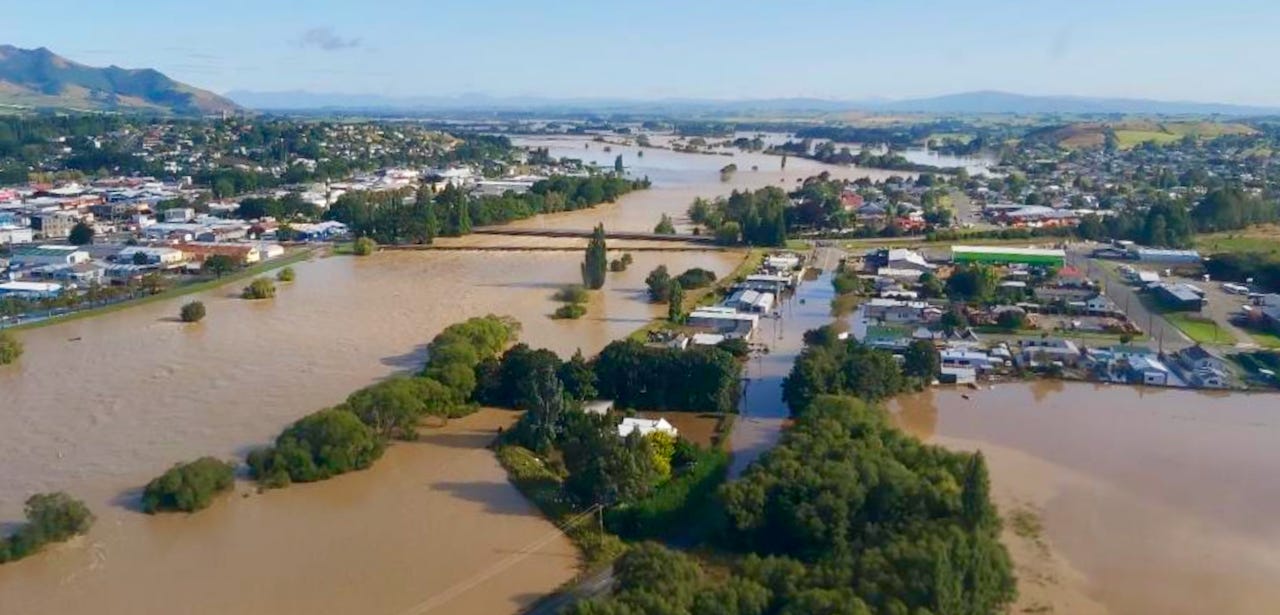
There’s little recognition of the fundamental fact that existing environmental practices and poorly-managed exposures and vulnerabilities (of people, dwellings, and infrastructure) are major contributors to weather-related disasters. A fact that was painfully demonstrated by the January 2026 landslide disaster at the campground at Mauao, Tauranga.
The solution for dealing with the expected increased risk of weather extremes from climate change is obvious – strengthen existing efforts in to reduce exposures and vulnerabilities, including through better environmental and land use management.
Given the expertise involved in its report, it’s a shame that the Commission didn’t use the opportunity to examine and promote beefed-up disaster risk management and reduction capacities.
That should have included called out central government’s unwillingness to properly address disaster risk and the lack of effective governance of disaster risk. I think Dame Patsy Reddy, the Chair of the Commission, might agree with me on that: in her message introducing the Assessment, she states that strong governance is one of the most powerful tools we have for dealing with climate change. It’s true for disaster risk as well.
2) The beheading of the Ministry for the Environment (MfE)
The Ministry was set up in 1986, back in those long-forgotten, heady times when cross-disciplinary, integrated, systems thinking suddenly burst upon the scene, inventing the idea of “the environment” and offering new ways to understand and manage the complexities of the world around us.
Similar thinking led to the realisation that disasters were not just a hazards thing, but a result of how we put ourselves in the way of natural hazards and maltreat the environment.
Now, 40 years later, MfE faces a mid-life crisis. The Government is pursuing a plan for a new mega-ministry, the Ministry for Cities, Environment, Regions and Transport (MCERT), that would merge MfE with the Ministry of Housing and Urban Development, the Ministry of Transport and the local government functions of the Department of Internal Affairs.
The new ministry is intended to support the new resource management legislation, on planning and on the natural and built environment, that’s expected to be enacted later this year.
The beheading arises because the statutory role of Secretary for the Environment will be assigned to the ministry’s chief executive, in effect making it a part-time responsibility for the CEO, to be juggled with responsibilities for housing, urban development, transport and land use planning.
Civil society environmental organisations are not impressed and have strongly voiced their opposition to the plan. They argue it would mean a serious weakening of MfE’s current independent cross-government environmental advisory role.
Weighty criticism also comes from the Parliamentary Commissioner for the Environment, a role set up under the same 1986 law that established the Ministry for the Environment.
As a past Minister himself, Commissioner Simon Upton is no stranger to rearranging government agencies. But as his office states, while “he supports the technical intent of the Bill, he warns that there are major risks … as it could dilute independent environmental advice and sideline rural challenges. He recommends excluding the Ministry for the Environment from the merger in order to protect transparent and contestable decision‑making in the new resource management system.” Ouch.
The aim of MCERT, the Government says, is to more effectively tackle issues such as housing affordability, transport funding and environmental issues and to boost growth and productivity.
Fine aims of course. Who knows, it might work out well. We need all that stuff: jobs, houses, well-run communities, good transport and productive, efficient industries.
But not at the expense of degraded environments or increased disaster risk. And that will be hard to achieve without a strong champion of the environment within government.